What is Singularity?
Singularity, in the realm of physics and cosmology, refers to a point in spacetime where the gravitational forces cause matter to have an infinite density and zero volume, resulting in the breakdown of the laws of physics. This phenomenon often arises in relation to black holes, where gravitational singularities are typically located at the core. The implications of singularity are profound, leading to significant inquiries regarding the nature of black holes and their event horizons.
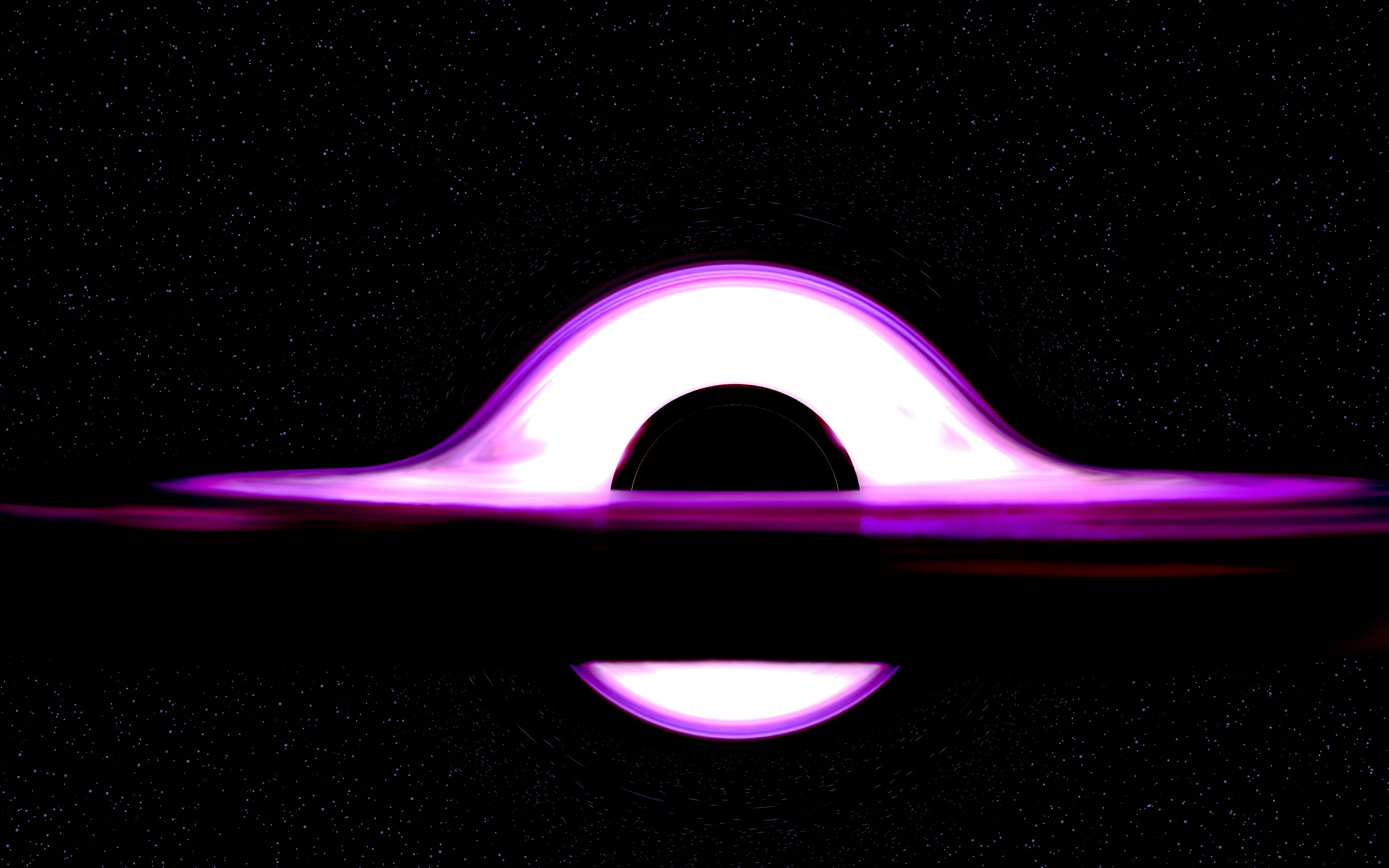
There are two primary types of singularities in the field of cosmology: gravitational singularities and initial singularities. Gravitational singularities, often associated with black holes, represent the endpoints of massive star evolution. In these scenarios, the gravitational pull becomes so intense that not even light can escape, rendering the singularity hidden from observation.
On the other hand, the initial singularity is thought to have existed at the very beginning of the universe, prior to the Big Bang. This singular point is where all matter, energy, space, and time were concentrated before expanding explosively, giving rise to the universe as we know it today. The rapid expansion that followed was pivotal in shaping cosmic structures and the laws governing the universe.
The study of singularities poses a major challenge for physicists, particularly because they often signify situations where our understanding of spacetime, gravity, and fundamental physics no longer holds valid. General relativity predicts their existence; however, the reconciliation of singularities with quantum mechanics remains an unresolved enigma. As researchers continue to explore singularity, they seek to unveil the nature of these extraordinary entities and their critical roles in both local and cosmic scales.
The Physics Behind Singularity: Understanding General Relativity
Einstein’s General Theory of Relativity revolutionized the understanding of gravity and its effect on the fabric of spacetime. In the context of singularities, general relativity provides critical insights into how mass and energy interact to warp spacetime, leading to fascinating phenomena such as black holes and the Big Bang. A singularity, in physics, is an event where certain physical quantities—like density—become infinite, posing significant challenges for theoretical frameworks.
At the core of general relativity is the Einstein field equation, which describes how the curvature of spacetime is directly related to the energy and momentum contained within it. Mathematically, this relationship is expressed through a set of ten interrelated equations. The solutions to these equations reveal that under extreme conditions, such as those present in the collapse of massive stars, a singularity can form. This collapse results in an area of infinite density and zero volume, where traditional laws of physics cease to function as we understand them.
Massive objects create significant curvature in spacetime, which affects the trajectory of nearby objects and light. Consequently, as an object with sufficient mass collapses, the surrounding spacetime becomes increasingly warped, leading to the formation of an event horizon—the boundary beyond which escape is impossible. The presence of such singularities in the universe challenges not only our understanding of gravity but also necessitates a reevaluation of quantum mechanics, suggesting the potential for a unified theory that encapsulates both realms.
The study of singularities represents an ongoing area of research within theoretical physics. While general relativity has proven effective in many contexts, the presence of singularities indicates the limits of our current understanding. Scientists aim to reconcile the phenomena associated with these singularities, ultimately seeking a more comprehensive framework that harmonizes the principles of general relativity with quantum mechanics.
The Role of Singularity in Modern Cosmology
In modern cosmology, the concept of singularity plays a pivotal role in understanding the origins and evolution of the universe. A singularity is defined as a point in spacetime where the gravitational field becomes infinite, leading to breakdowns in the physical laws as we know them. The most widely recognized singularity in cosmological models is the Big Bang singularity, which represents the moment when the universe began approximately 13.8 billion years ago. This singularity serves as a cornerstone for the contemporary view of cosmic expansion and the subsequent evolution of structures within the universe.
The implications of the Big Bang singularity extend beyond the initial conditions of the universe. They have consequences for the theory of cosmic inflation, which suggests a period of rapid expansion that occurred immediately after the Big Bang. Understanding this singularity helps researchers explain the uniformity of cosmic microwave background radiation and the distribution of galaxies. Moreover, the behavior of spacetime near this singular origin influences many frameworks in theoretical physics, including general relativity and quantum mechanics.
Another area of significant research is the relationship between singularities and black holes. Black holes are regions of spacetime where singularities reside at their centers, manifesting as incredibly dense points that prevent even light from escaping their gravitational pull. Furthermore, the information paradox associated with black holes has sparked debates among physicists regarding the nature of information and its preservation in the face of singularities. These discussions challenge and refine our understanding of time and space, as they delve into how singularities redefine the limits of our current theories. In summary, singularities represent critical junctures in modern cosmological research, shaping theories that unravel the complexities of the universe.
Philosophical Implications of Singularity: A Glimpse Beyond Physics
The concept of singularity captivates not only physicists and cosmologists but also philosophers who ponder the profound implications it holds for our understanding of existence. At the core of this exploration lies the intriguing question: what happens to our perception of reality when we consider the limits of our knowledge, especially in light of singularity? Singularity, as a point where defined laws of physics no longer apply, raises existential questions that extend far beyond the realm of empirical observation.
One such contemplation concerns the nature of ‘nothingness.’ In traditional philosophical discourse, nothingness often signifies a void or absence, yet within the context of singularity, it could represent a state from which the universe emerged. This challenges the notion of beginnings and prompts a reevaluation of temporal constructs. How do we conceive of time if it ceases to exist before the singularity? Such considerations urge us to redefine our understanding of causality and existence itself.
Moreover, the implications of singularity extend to our comprehension of consciousness. If singularity represents a point of infinite density and gravity, does it also imply an underlying unity of consciousness within the universe? The connection between the individual mind and the cosmos raises profound metaphysical questions about our place in the grand scheme. Each individual consciousness, bound by the limitations of physical reality, may carry echoes of the singularity, suggesting that our understanding of selfhood could be an integral piece of a larger, collective consciousness.
In grappling with the philosophical implications of singularity, we engage with intricate layers of thought that challenge our existing paradigms. Such considerations not only contribute to the ongoing discourse in physics and cosmology but also enrich our understanding of existence and reality itself. As we navigate the profound mysteries positioned at the intersection of these fields, we inevitably confront the limitations of human inquiry and the vast unknown that lies ahead.